The Erosion of the 60 Percent Solution Why Incumbent B2B SaaS Platforms Are Struggling in the Agentic AI Era

The landscape of business-to-business (B2B) software-as-a-service (SaaS) has entered a critical inflection point in 2026, as established industry leaders face increasing scrutiny over the quality of their integrated artificial intelligence features. For years, the prevailing strategy for major incumbents such as HubSpot, Salesforce, and Figma was to maintain market dominance through distribution and the "bundling" of new features. However, recent performance benchmarks and user experience reports suggest that this "60% solution"—shipping AI tools that are functional but significantly less capable than dedicated, AI-native point solutions—is no longer a viable path to growth. As agentic AI competitors continue to compound their technological advantages at an unprecedented rate, the window for legacy platforms to provide "good enough" AI features has effectively closed.
The most recent example of this friction occurred with the launch of HubSpot’s AI Engine Optimization (AEO) tool. HubSpot, a company widely regarded as a titan in the CRM and marketing automation space, introduced the tool as part of a broader push into agentic workflows. AEO, a category of search engine optimization specifically designed to improve a brand’s visibility within AI LLM responses and chat interfaces, has become a high-priority requirement for digital marketers in 2026. Despite HubSpot’s massive distribution network and deep integration with customer data, early testing of the AEO tool has yielded results that many industry experts describe as underwhelming.
In a high-profile case study involving the SaaStr AI ecosystem, the HubSpot AEO tool returned a "0%" sentiment score and provided no actionable recommendations for improvement. Despite this lack of utility, the platform immediately prompted the user for a $50 monthly subscription for additional prompts. This pricing model stands in stark contrast to the current market, where specialized agentic products often offer more robust diagnostic capabilities at lower price points or even for free. The discrepancy highlights a growing "quality gap" between incumbent platforms attempting to check an "AI feature" box and agile startups that have built their entire architecture around agentic capabilities.
The Rise of the Agentic Point Solution
The struggles of incumbents are occurring against a backdrop of explosive growth for AI-native "point solutions." In the realm of software development and "vibe coding"—a term used to describe high-level, natural language-driven application building—startups like Lovable and Replit have seen their revenues skyrocket. As of early 2026, Lovable has reached an annual recurring revenue (ARR) of $400 million, notably adding $100 million in a single month during the first quarter of the year. Similarly, Replit has surpassed the $400 million ARR mark and is reportedly targeting a $1 billion run rate by the end of the fiscal year, supported by a $9 billion valuation following a $400 million capital raise.
These companies represent a broader trend: the "vibe coding" and agentic tool category has surpassed $1 billion in total ARR in less than 18 months. These platforms have succeeded by focusing on "100% solutions"—tools that do not just diagnose a problem but autonomously execute the fix. For instance, while a legacy tool might point out a lack of structured data on a website, an agentic tool like Lovable or Cursor can generate the JSON-LD code, test it, and deploy it to a production environment in minutes.

The speed at which these native solutions iterate has fundamentally moved the goalposts for the entire industry. In late 2025, a B2B vendor could successfully market an AI feature that was "60% as good" as a specialized tool because buyers were still in an experimentation phase. However, as large language models (LLMs) became more sophisticated and accessible, the cost of switching to a superior point solution dropped. By 2026, the compounding improvement of AI-native tools has created a chasm that distribution alone cannot bridge.
Case Study: Figma Make and the Design-to-Build Shift
Figma, the dominant force in collaborative design, provides a cautionary tale of how quickly a market can move away from a legacy leader. The company’s "Figma Make" initiative was intended to capitalize on the generative AI boom by allowing users to create app designs through simple prompts. However, by the time the product was fully monetized in March 2026, the market had shifted from "designing apps" to "building apps."
Reports from the field indicate that Figma Make’s output often leaned on generic aesthetics—characterized by the "purple gradients" common in 2025-era AI startups—and frequently hallucinated content rather than pulling from existing site data. More importantly, Figma’s competitors in the agentic space had already moved beyond design mockups. Platforms like v0 and Replit were allowing users to skip the design phase entirely, moving straight from a text prompt to a functional, hosted application.
Figma’s attempt to monetize these features through credit-based add-ons—priced between $120 and $240 per month—has reportedly seen a "measured" ramp-up. Industry analysts suggest that this revenue is currently a rounding error compared to the hundreds of millions being captured by companies that provide end-to-end building capabilities. The lesson for B2B vendors is clear: if an AI feature does not provide a best-in-class outcome, users will treat it as a "pack-in" or a free utility, but they will not pay a premium for it.
The Democratization of Product Development
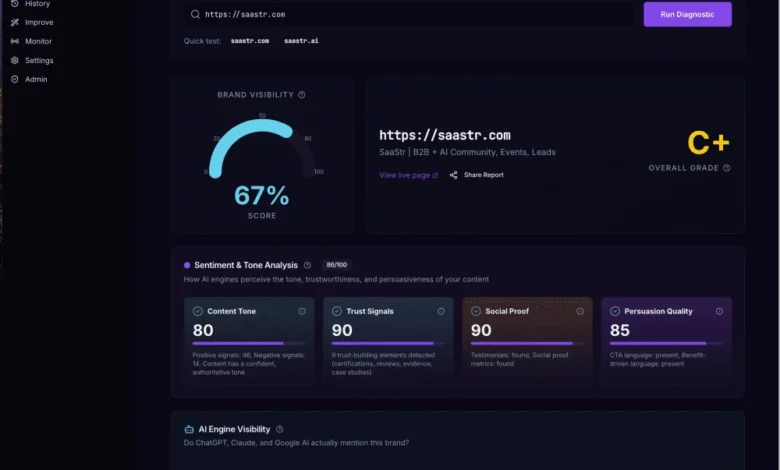
Perhaps the most significant threat to the "60% solution" is the plummeting cost and time required to build competitive tools. In a notable experiment, an industry professional was able to build a functional AEO analyzer using Replit in approximately 60 minutes. This DIY tool not only matched the diagnostic capabilities of HubSpot’s professional offering but exceeded it by providing ready-to-use prompts for fixing identified issues, such as missing JSON-LD structured data and improper heading hierarchies.
The fact that a non-engineer can build a competitive alternative to a multi-billion dollar company’s AI product in a single afternoon changes the defensive moat for SaaS companies. Historically, incumbents relied on the difficulty of software engineering to prevent customers from building their own solutions. In the age of agentic AI, that moat has evaporated. If a platform’s integrated AI is mediocre, a customer can simply "vibe code" a custom internal tool that perfectly fits their needs.

Why Incumbents Continue to Ship Subpar AI
Despite the clear risks, many B2B vendors continue to release underperforming AI products. Market analysts point to three primary reasons for this trend:
- Shipping for the Sake of Shipping: There is immense pressure from boards of directors and public markets to prove that a company has an "AI strategy." This often results in the release of "minimum viable products" (MVPs) that are too minimal to be viable in a hyper-competitive AI landscape.
- The Feedback Loop Delay: Large organizations often have slower feedback loops. By the time a product is conceived, built, and cleared by legal and compliance departments, the "state of the art" in the AI world has often moved on.
- Over-Reliance on Distribution: Legacy companies often believe their existing user base will accept a 60% solution because it is already integrated into their workflow. While this was true for cloud and mobile transitions, the utility gap in AI is so large that users are willing to break their workflows to use a better tool.
Chronology of the AI Quality Shift (2023–2026)
- Late 2023 – Mid 2024: The "Wrapper" Era. Most B2B AI features are simple wrappers around GPT-4. Users are impressed by basic summarization and drafting capabilities.
- Early 2025: The Rise of the Agents. Startups begin moving beyond chat interfaces to "agents" that can perform multi-step tasks. Incumbents begin announcing major AI roadmaps.
- Late 2025: The Compounding Gap. LLMs reach a level of sophistication where the difference between a generic implementation and a highly tuned, specialized implementation becomes obvious to the average user.
- Early 2026: The Monetization Crisis. Incumbents attempt to charge for AI features, but find that users are migrating to AI-native point solutions like Lovable, Replit, and Cursor, which provide 10x the utility for similar costs.
Future Implications for the SaaS Industry
The current trajectory suggests that the B2B SaaS market is moving toward a "best-in-class or nothing" reality for AI. For companies like HubSpot and Figma, the challenge is to move past the "AI feature" mindset and toward an "AI-native" architecture. This may require cannibalizing existing revenue streams or making radical changes to the core user interface.
For the broader market, the "60% solution" serves as a warning. A bad AI feature does more than fail to generate revenue; it damages the brand’s reputation for innovation. When a high-value customer tries an integrated AI tool and receives a 0% score or a hallucinated response, they conclude that the platform "doesn’t really do AI." Once that perception is set, it becomes difficult to win that customer back, even if the tool is eventually improved.
As we move into the latter half of 2026, the bar for AI quality will only continue to rise. The market has moved past grading on a curve. In the agentic era, a product must either solve the problem entirely or risk becoming an irrelevant footnote in a competitor’s growth story. The era of the "60% solution" is officially over; the era of the autonomous, 100% solution has arrived.